
Vanta vs. Drata vs. Thoropass: Which Fits a Fintech Company in 2026
Vanta vs. Drata vs. Thoropass: Which Fits a Fintech Company in 2026
TL;DR
- All three get you to SOC 2.
- Vanta has the broadest framework coverage and the most integrations, good if your fintech needs SOC 2, PCI DSS, and ISO 27001 running at once.
- Drata is engineering-led and the cheapest way to add frameworks later, good if your team wants to own the process themselves.
- Thoropass bundles the actual audit into the platform and assigns you a compliance team, good if you'd rather pay more and hand the whole thing to someone else.
- For most fintechs juggling multiple frameworks and a lean team, that guided model is worth the premium, which is also why a vCISO layered on top of any of these three tends to matter more for fintech than the platform choice itself.
Fintech compliance isn't just SOC 2. It's SOC 2 plus PCI DSS plus whatever your state regulator wants plus a bank partner who has opinions about your access controls. The platform you pick needs to survive that, not just make a nice dashboard.
Why is this comparison different for fintech than for a normal SaaS company?
Because a normal SaaS company usually just needs SOC 2 to close enterprise deals. A fintech usually needs SOC 2 and PCI DSS, often GLBA-related controls, sometimes state money transmitter requirements, and almost always a bank or payments partner running its own due diligence on top of all of it. The platform has to handle more moving pieces, not just one framework.
What is Vanta best for?
Breadth. Vanta covers SOC 2, ISO 27001, HIPAA, GDPR, PCI DSS, and more, and it's generally considered the most mature and most integrated of the three. For a fintech running multiple frameworks at once, that coverage matters. The tradeoff is pricing: it's seat-based, and costs tend to creep as your team grows, with list pricing starting around the $10k a year range before your actual deal is quoted.
What is Drata best for?
Drata is the closest like-for-like competitor to Vanta, and the two are increasingly hard to tell apart on raw capability. Where Drata tends to win is cost efficiency when you're adding a second or third framework, and it's often described as more engineering-led, which fintechs with a strong internal engineering culture tend to like. You're still running this largely yourself, just with a platform that gets out of your way.
What is Thoropass best for?
Thoropass, formerly Laika, does something the other two don't: it bundles the actual SOC 2 audit into the product and assigns you a dedicated compliance success team from day one. One way people describe the difference: Vanta hands you a checklist; Thoropass hands you a coach and a referee. It also specifically markets itself toward fintech, healthtech, and SaaS, and it scores notably well on support (a 9.6 out of 10 on G2, versus Vanta's already-strong 9.0). The cost of that hand-holding is a higher starting price, generally around $20k a year.
How hands-on is each one, really?
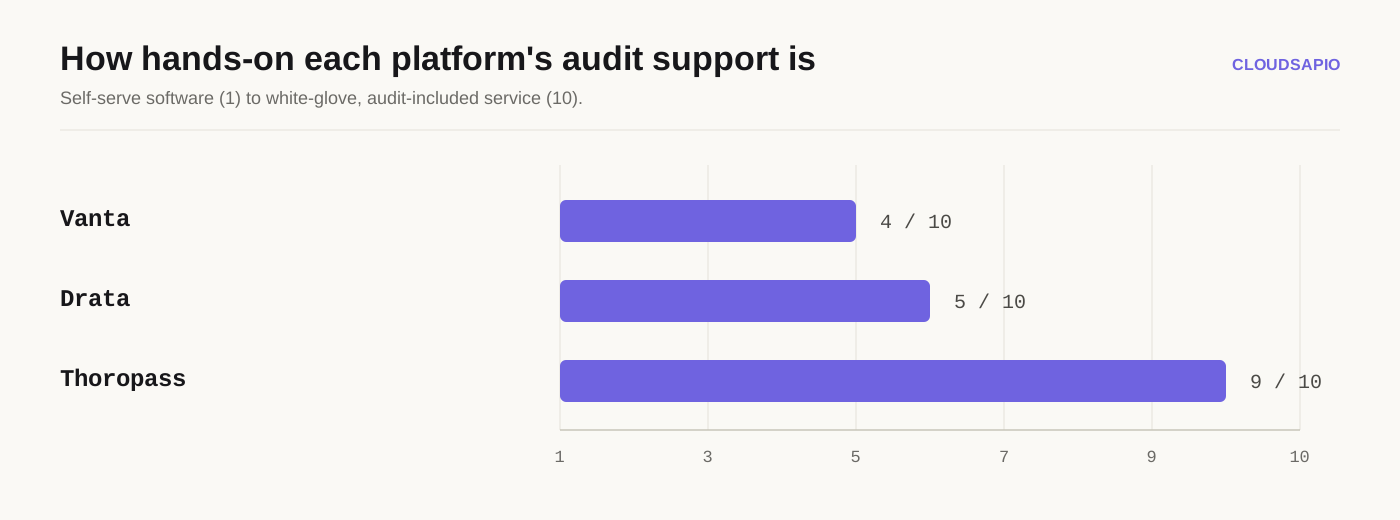
Here's roughly how the three line up on service model.
That gap is the whole decision in one picture. Vanta and Drata expect you to drive. Thoropass expects to drive for you, at a price that reflects it.
Which one should a fintech actually pick?
If you're running SOC 2 and PCI DSS together with a lean team, Vanta's breadth probably saves you from stitching two platforms together.
If you have strong internal engineering ownership and want the cheapest path to adding frameworks over time, Drata fits.
If you don't have a dedicated compliance hire and want someone else to own the audit relationship, Thoropass's bundled model is worth the premium.
If your biggest risk is complexity, not tooling, none of these three replace a person who understands fintech-specific regulatory expectations. The software collects evidence. It doesn't know what your bank partner is going to ask.
We help you set up Vanta,
Drata and Thoropass in 6 - 10 weeks.
FAQs
Does any of these three include the actual SOC 2 audit?
Only Thoropass bundles the audit itself into its platform. With Vanta or Drata, you still need to hire an independent CPA firm to conduct the audit separately.
Do any of them cover PCI DSS specifically?
Vanta has PCI DSS coverage, and Drata and Secureframe are generally cited as having it too, though smaller platforms may not. Confirm current PCI scope directly with the vendor before you commit, since compliance platforms update framework support frequently.
Is Vanta or Drata better for a fintech?
Capability-wise they're close. Vanta tends to win on integrations and framework breadth, Drata tends to win on cost as you add frameworks. For a fintech, the deciding factor is usually which frameworks you need running simultaneously.
Why does Thoropass cost more?
Because you're not just buying software, you're buying the audit and a compliance team alongside it. For a lean fintech team without in-house compliance expertise, that bundled service often works out cheaper than the hours you'd otherwise spend managing it yourself.
Do these platforms replace a vCISO or compliance consultant?
No. They automate evidence collection and track control status. None of them tell you which controls actually matter for a fintech's specific regulatory exposure, or sit in the room when your bank partner asks hard questions.
Ready to figure out which one actually fits?
cloudsapio works across all three platforms and can tell you, based on your specific fintech's frameworks and risk profile, which one gets you to audit-ready fastest without buying more than you need. Book a call →
Ready to move faster?
Too much to do,
too important to ignore.
Start with a 30-minute discovery call. If we're not the right fit, we'll tell you and point you in the right direction. If we are, we'll leave the call with a clear plan to get you up and running.