Inside the Enterprise Procurement Security Review: A Stage-by-Stage Map for SaaS Vendors
Inside the Enterprise Procurement Security Review: A Stage-by-Stage Map for SaaS Vendors
TL;DR
- An enterprise security review has seven stages: intake, questionnaire, evidence review, security call, legal terms, risk rating with fixes, and final approval.
- For a typical mid-market buyer, the whole process takes around 10 weeks, and stages 3 to 6 overlap.
- Most delays come from vendors who cannot produce evidence quickly, not from difficult buyers.
- A current SOC 2 Type II report, a reusable answer library, and one person who owns the process will cut the timeline more than anything else.
Your champion loves the product. Legal has the contract. Finance has the budget. Then someone says, "We just need to loop in security," and your deal disappears into a two-month tunnel. This is the map of that tunnel.
What is an enterprise procurement security review?
It is the process a large company runs before it lets a new vendor touch its data. A security or vendor risk team decides how risky you are, asks you to prove your controls, and either approves you, approves you with conditions, or quietly stops replying. It sits between "we want to buy this" and "here is the signed contract."
Why does it take so long?
Three reasons. The buyer's security team is reviewing dozens of vendors at once. Your answers often trigger follow-up questions. And the evidence they want (audit reports, policies, pen test results) usually lives in six different places at your company, owned by three different people, one of whom is on vacation.
What are the stages, and what happens in each one?
Seven stages, in the order most buyers run them.
Stage 1: What happens at intake?
You get an invitation to a vendor portal you will never log into again. You fill in company details, the kind of data you will handle, where it is hosted, and your subprocessors. The buyer uses your answers to assign a risk tier. That tier decides how much scrutiny the rest of the process gets, so a vendor touching customer PII will face a much heavier review than one touching nothing sensitive.
Stage 2: What is in the security questionnaire?
Usually a standard framework like SIG or CAIQ, or a custom spreadsheet with 200 to 400 questions. Roughly 80 of them are some version of "Do you have a policy for this?" Answer them consistently. A mismatch between what you wrote in question 12 and question 212 is the sort of thing reviewers remember.
Stage 3: What evidence do they ask for?
Typically, a SOC 2 Type II report, a recent penetration test summary, your information security policy, incident response plan, business continuity plan, and a subprocessor list. Reviewers tend to read the exceptions section of your SOC 2 report first. If your audit period ended months ago, expect a request for a bridge letter covering the gap.
Stage 4: What is the security call like?
A 30 to 60 minute conversation with a security analyst on the buyer side. They will ask about architecture, encryption, access control, and how you handle incidents. Bring someone technical. A sales rep improvising answers about key management is how a two-week stage becomes a six-week stage.
Stage 5: What does legal want on security?
The contract gets security terms attached: a data processing agreement, breach notification windows (often 72 hours or less), audit rights, cyber insurance minimums, and a BAA if you handle health data. Legal and security review in parallel, but their redlines collide often.
Stage 6: What happens at risk rating and remediation?
The reviewer rates your findings. Low risks get noted. High risks need a fix plan, a compensating control, or a formal risk acceptance from someone senior on the buyer side. This is where "we plan to implement MFA everywhere by Q3" either saves the deal or sinks it.
Stage 7: What does final approval look like?
You get approved, sometimes with conditions. Then the process repeats every year through reassessment, and many buyers now expect you to notify them of material security changes in between.
How long does each stage take?
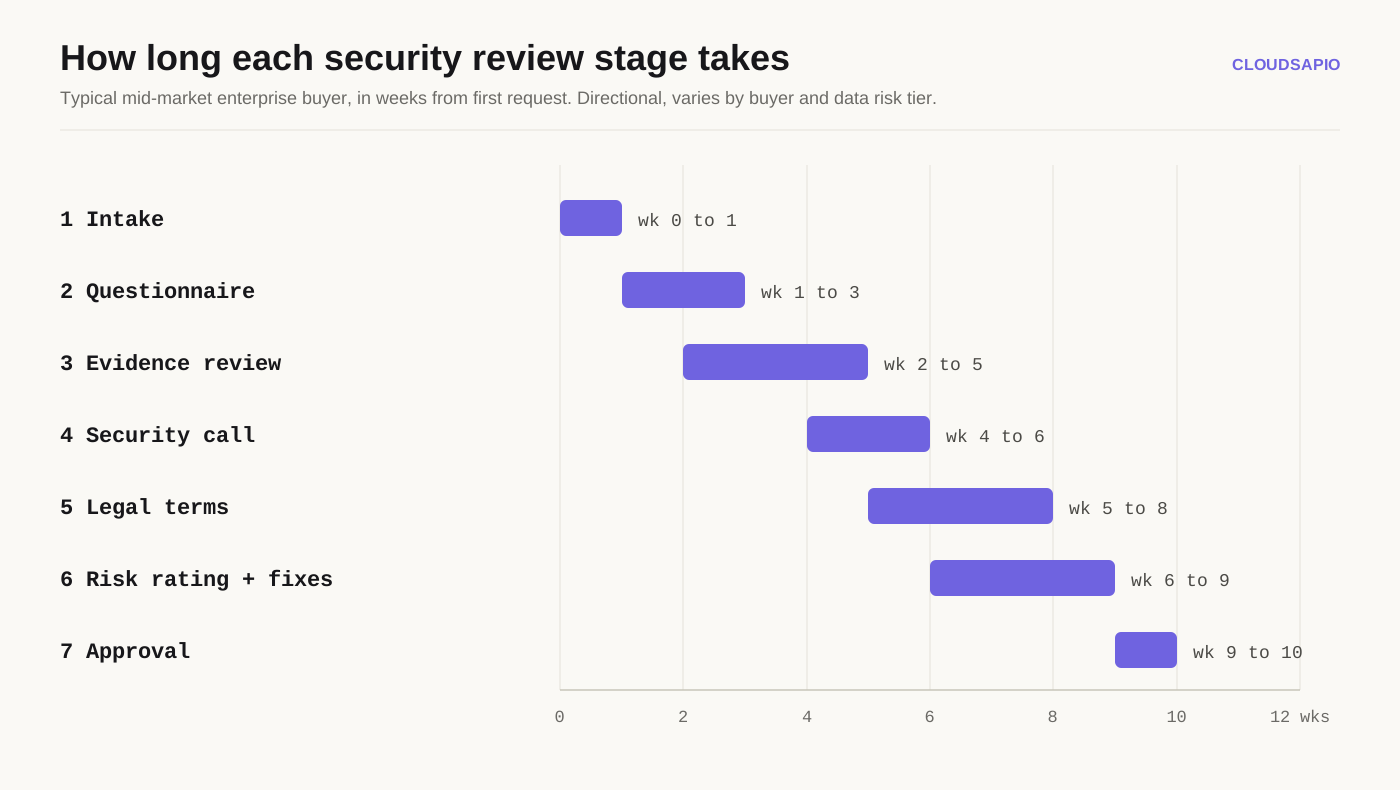
Here is the typical timeline for a mid-market buyer.
The stages overlap, which is why the total lands around 10 weeks and not the 20 you get from adding the bars end to end. The evidence review and the legal terms are the two longest, and they are also the two where preparation pays off the most.
How can a SaaS vendor shorten the review?
- Get a SOC 2 Type II report before you need it for a specific deal, since Type I often prompts follow-up questions.
- Build a master answer library from your first completed questionnaire and reuse it.
- Publish a trust center with your certifications, policies, and subprocessor list so buyers can self-serve.
- Keep an evidence folder ready: latest SOC 2, pen test summary, policies, architecture diagram, and insurance certificate.
- Assign one person to own every review from intake to approval.
- Know your data flows and subprocessors well enough to explain them without checking a wiki.
Practical security and compliance programs from a practitioner-led team. Start with a $3K/sprint
FAQs
Do I need SOC 2 to pass an enterprise security review:
Not always, but most enterprise buyers ask for it, and without it you will be answering far more questions and providing far more custom evidence. ISO 27001 is accepted by many buyers as an alternative, especially outside the US.
What is the difference between SIG and CAIQ?
SIG is a questionnaire from Shared Assessments used widely in financial services and other regulated industries. CAIQ comes from the Cloud Security Alliance and focuses on cloud service providers. Buyers choose based on their own industry and risk tier.
What is a bridge letter?
A short statement from your management confirming that your controls have not materially changed since your SOC 2 audit period ended. Buyers ask for it when your report is a few months old.
Can I send my SOC 2 report instead of filling out the questionnaire?
Sometimes. Many buyers will accept the report and answer a shortened set of follow-up questions, but the decision belongs to their security team, so ask early.
What happens if I fail a control?
Failing a control rarely ends the deal outright. You will usually be asked for a remediation plan with dates, or a compensating control that reduces the risk in the meantime.
Ready to shorten your next security review?
cloudsapio helps SaaS companies get audit-ready, build the evidence library buyers ask for, and handle the security call so your deals stop stalling in the tunnel. Book a call →
Ready to move faster?
Too much to do,
too important to ignore.
Start with a 30-minute discovery call. If we're not the right fit, we'll tell you and point you in the right direction. If we are, we'll leave the call with a clear plan to get you up and running.