The State of SOC 2 Readiness in 2026

The State of SOC 2 Readiness in 2026
Cost, timelines, and the AI governance gap, benchmarked.
TL;DR
- AI adoption is now the single biggest force reshaping SOC 2 programs. In Thoropass's 2026 survey of 536 security and compliance leaders, 69% said AI tool adoption in their organization is outpacing their ability to build the controls to govern it.
- A first Type II report still costs a mid-size company $30,000 to $150,000 all in, and renewal years run 60 to 80% of that on top of an ongoing GRC platform subscription.
- Timelines have not gotten meaningfully shorter despite automation. Budget 5 to 10 months from kickoff to final report for a first Type II audit.
- Compliance automation is now the default path, not the exception. Somewhere between 60 and 70% of first-time SOC 2 companies run their program through a GRC platform instead of spreadsheets.
- Auditor capacity, not software, is the real constraint in 2026. The CPA pipeline has shrunk roughly 17% in three years, and scheduling conflicts remain the single most common cause of audit delay.
The macro narrative
Last year's story was about SOC 2 becoming table stakes for enterprise sales. That story hasn't changed. What's changed in 2026 is what sits inside the systems being audited. Compliance and IT teams have watched employees and product teams adopt AI tools faster than governance programs can account for them, and the gap between the two is now the headline risk in almost every major industry survey this year. Thoropass's report puts 55% of respondents naming AI-related data exposure as their top breach concern, ahead of ransomware and cloud misconfiguration. A-LIGN's 2026 benchmark report found 72% of organizations worried about AI's impact on compliance, a sharp jump from the year before.
A GRC platform can automate evidence collection and flag configuration drift, but it can't decide whether an internal AI agent touching customer data belongs inside your system boundary, or write the usage policy that governs it. That decision still needs a person who understands both the framework and the business. Owning a compliance platform and running a compliance program have always been different things, and 2026 is the year that difference started showing up directly in audit findings.
What it costs a mid-size company
For a company in the 50 to 250 employee range pursuing a first Type II report, the full picture breaks down like this:
- Readiness assessment and remediation: $10,000 to $40,000, whether done in-house or through a partner
- GRC platform subscription: $5,000 to $20,000 a year
- Penetration testing: $8,000 to $20,000, more with multiple products in scope
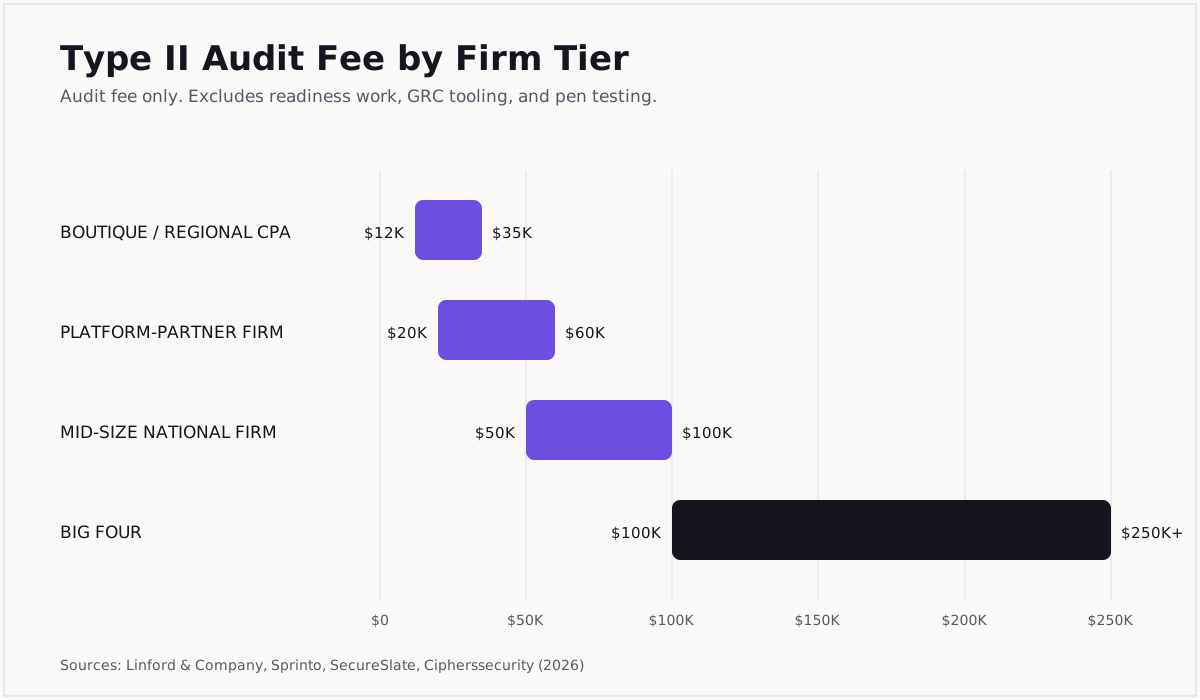
- The audit fee itself: $12,000 to $250,000 or more, depending almost entirely on which tier of CPA firm signs the report
- Internal labor: 700 to 1,000 staff hours a year at a mid-size org, worth $25,000 to $90,000 if it were billed out
All in, most mid-size companies land between
$30,000 and $150,000 in year one. Renewal years run 60 to 80% of the first-year total, plus the ongoing platform subscription. The audit fee is the widest variable in that list, and it's driven almost entirely by firm tier rather than company size.
Time to a report
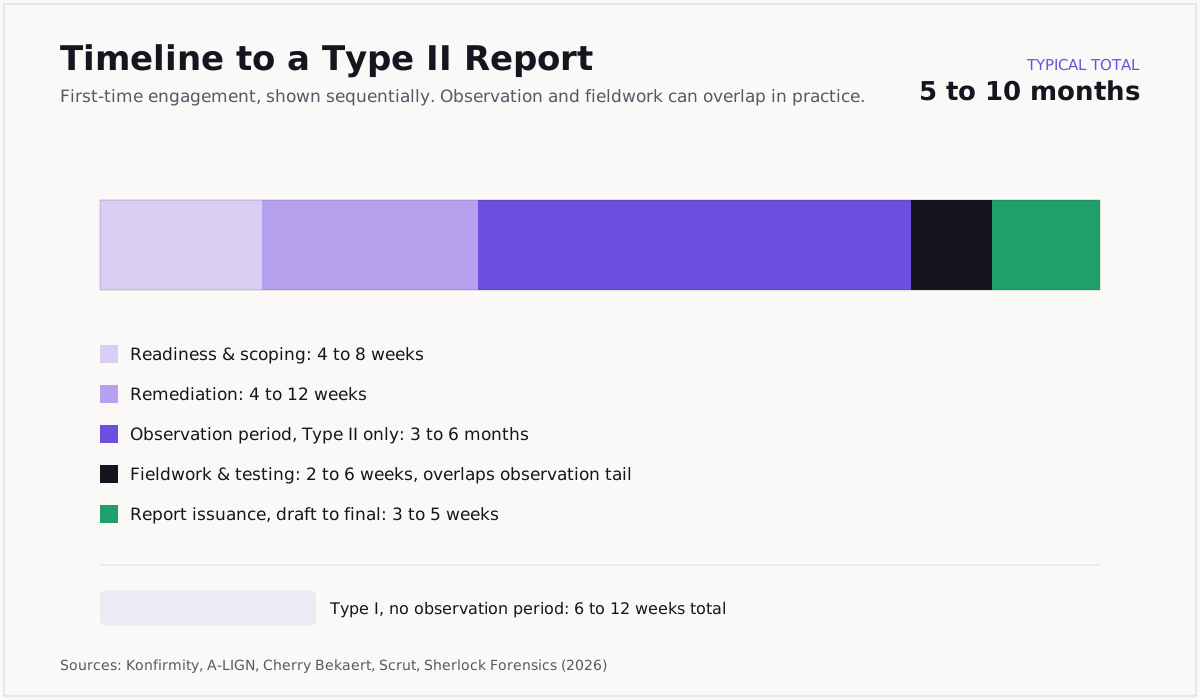
Timeline is the other number founders and compliance leads ask about first, and it hasn't compressed the way tooling vendors imply. A first Type II engagement typically runs:
- Readiness and scoping: 4 to 8 weeks
- Remediation: 4 to 12 weeks
- Observation period, Type II only: 3 to 6 months
- Fieldwork and testing: 2 to 6 weeks, usually overlapping the tail of the observation period
- Report issuance, draft to final: 3 to 5 weeks
Add it up and most first-time Type II engagements run
5 to 10 months from kickoff to final report. A Type I report skips the observation period entirely and typically closes in 6 to 12 weeks, which is why it's still the fastest path for a company chasing an urgent deal.
Metrics and benchmarks
The broader numbers behind those two figures:
- The compliance automation category, the layer Vanta, Drata, Secureframe, and Sprinto occupy, is worth roughly $1.53 billion in 2026 and is projected to double by 2031.
- The wider GRC software market sits around $57.1 billion in 2026, growing near 11% a year.
- Over 70% of enterprise buyers now require a SOC 2 report before they'll sign a vendor contract.
- Between 60 and 70% of first-time SOC 2 companies run their program on a GRC platform rather than spreadsheets.
- 90 to 95% of SOC 2 reports land an unqualified opinion. First-time audits see qualification rates closer to 5 to 10%, most often tied to access review and deprovisioning gaps.
Year over year, the platform market is splitting by segment rather than consolidating around one winner. Vanta holds close to double Drata's customer count in the mid-market as of February 2026.
Drata has pulled ahead in enterprise, adding more than 20 net new enterprise accounts since early 2025 against roughly 9 for Vanta, and now out-earns Vanta on average enterprise spend.
Underneath both, Sprinto's mid-market customer base grew 233% over the same stretch, a small base but the fastest growth rate in the category.
Buyers are sorting by company stage now, not defaulting to a single vendor the way they might have two years ago.
We help you prepare for
SOC 2 Type 1 in 6–10 weeks.
Key trends and the direction of travel
The clearest emerging shift is that AI governance is moving from a talking point to a line item.
A-LIGN found organizations splitting three ways in response:
- Pursuing formal ISO 42001 certification
- Bolting AI-specific controls onto an existing SOC 2 assessment
- Running an internal self-assessment and hoping it holds up.
None of the three has become the default yet. Vendors are already building for this. Drata opened limited access to an AI agent governance product in August, built to track and evidence what autonomous agents are doing inside a customer's environment, starting with Anthropic. Separately, a survey from Compliance Week and konaAI found more than 83% of compliance leaders already using AI tools themselves, against only about 25% who say they have a strong governance framework in place for that use.
Over the next 12 to 36 months, expect an AI-in-scope addendum to become a standard line item on SOC 2 engagements rather than a custom ask. Expect ISO 42001 to become a common companion certification for companies selling into enterprise AI buyers within two years. And expect continuous, always-on evidence collection to become the baseline buyers expect from a trust center rather than a differentiator, as the point-in-time nature of even a Type II report starts to look dated next to a live status page.
Critical challenges and pain points
The operational bottlenecks compliance leads name most often haven't changed much: late auditor engagement, manual evidence chasing, scope creep, and gaps in periodic controls like access reviews.
What has changed is the supply side. The U.S. accounting profession shrank roughly 17% between 2019 and 2022, and the pipeline behind it keeps thinning, with accounting degree completions hitting a 20-year low in the most recent academic year. That shortage shows up directly in SOC 2 timelines. Scheduling conflicts with the auditor remain the single most common reason a report slips past its target date.
The gap between leaders and laggards comes down to how evidence gets collected. Companies running continuous, automated evidence collection walk into fieldwork with a real trail an auditor can review with confidence. Companies still assembling evidence in the two weeks before their observation period closes are the ones most likely to see a qualified opinion or a delayed report.
The same split shows up in framework selection. Programs that scope their AI-touching systems into the audit boundary before readiness work begins avoid the mid-fieldwork surprise of an auditor asking about a tool nobody documented.
The playbook
f you're planning a first or renewal SOC 2 engagement in the next two quarters, the moves that matter most are straightforward:
- Scope the audit boundary before you shop for a platform, not after. The platform should fit the scope, not define it.
- Book your auditor slot as early as your budget allows. Given current capacity constraints, the calendar is now a bigger risk than the controls.
- Put your AI tooling boundary in writing before readiness work starts. Decide what's in scope and what isn't before an auditor asks.
- Treat evidence collection as a year-round habit, not a pre-audit sprint. It's the single biggest lever on both audit quality and internal labor cost.
- Keep the platform subscription and the audit firm as two separate decisions. A GRC subscription is not a compliance program on its own, and a good auditor doesn't require a specific platform.
cloudsapio runs practitioner-led SOC 2, ISO 27001, and HIPAA programs for teams who want the readiness work, the questionnaire load, and the auditor relationship handled without pulling engineers off the roadmap.
If your next report is on the calendar, or should be,
book a discovery call.
FAQs
What's the real difference between a Type I and Type II report?
A Type I report evaluates whether your controls are designed correctly at a single point in time. A Type II report tests whether those same controls actually operated effectively over a period, usually 3 to 12 months. Most enterprise buyers eventually require Type II.
How long is a SOC 2 report valid?
Reports are generally treated as valid for 12 months. Renewal engagements typically take 6 to 8 months and cost 60 to 80% of the first-year audit fee.
Does SOC 2 currently cover AI systems?
Not by default. AI-specific controls are usually added to the standard Trust Services Criteria on a per-engagement basis, and that's the fastest-growing area of scope creep in 2026 audits.
Can a mid-size company complete SOC 2 without a GRC platform?
Yes, but it's the minority path. Between 60 and 70% of first-time companies use one, largely because the labor savings on evidence collection outweigh the subscription cost.
What's the fastest realistic path to a report?
A Type I report, since it skips the observation period entirely. Most companies can complete one in 6 to 12 weeks with a dedicated project owner and an auditor slot booked early.
Ready to move faster?
Too much to do,
too important to ignore.
Start with a 30-minute discovery call. If we're not the right fit, we'll tell you and point you in the right direction. If we are, we'll leave the call with a clear plan to get you up and running.