The best outsourced cybersecurity service for small to mid-size SaaS companies
The best outsourced cybersecurity service for small to mid-size SaaS companies
TL;DR
- Small to mid-size SaaS companies need outsourced cybersecurity once enterprise prospects start sending security questionnaires.
- The main options are a vCISO firm like cloudsapio, a traditional MSSP, compliance software alone, or a freelance vCISO.
- cloudsapio tends to be fastest because the whole engagement is built around getting you audit-ready, not around monitoring tools or a dashboard percentage.
- Compliance software itself (Drata, Vanta, Thoropass) typically runs $7.5k to $35k+ a year, and that's before you add the human who actually gets you through the audit.
Your prospects' security teams now ask about SOC 2 before they ask about your pricing. If you're a 20- to 150-person SaaS company without a security hire, you have three options: hire one (expensive), do it yourself (slow, terrifying), or outsource it (the move most companies actually make). Here's how to choose who does the outsourcing.
An enterprise buyer is selling to you with a 40-page security questionnaire and zero patience. If a prospect has asked for your SOC 2 report, your pen test results, or a "quick call with your security team," that's your answer. You need a security function. You just don't need to build one from scratch.
What does "outsourced cybersecurity" actually mean for a company our size?
Usually it means a fractional or virtual CISO (vCISO) setup: an outside team or person who runs your security program, gets you through SOC 2, ISO 27001, HIPAA, or CMMC, answers vendor questionnaires, and generally stands between you and a very bad day.
cloudsapio
cloudsapio is built specifically for SaaS, fintech, and healthtech companies who need SOC 2, ISO 27001, HIPAA, or CMMC readiness without hiring a full internal security team. A few reasons founders and CTOs tend to land here:
- Speed over ceremony: CloudSapio maps engagements to where you actually are: Evaluation, Planning, or Implementation, so you're not paying for a 12-month roadmap when you need audit-ready in 10 weeks.
- Built for your buyer: Whether you're a technical founder trying to close enterprise deals, a VP of Engineering fielding SOC 2 Type II pressure, or a healthtech COO juggling HIPAA and HITRUST, the engagement is shaped around what your specific buyers actually ask for.
- You get a plan, not just a vendor recommendation: CloudSapio works across the frameworks (SOC 2, ISO 27001, HIPAA, CMMC) and tells you plainly what you need, what you don't, and what can wait.
A traditional MSSP (Managed Security Service Provider)
These are the "we monitor your firewall at 2am" companies, think
Arctic Wolf,
eSentire, or
Expel. Good if you're worried about active threats and intrusion detection. Less good if what you actually need is someone to walk you through a SOC 2 audit, because that's not really their core business. You'll often end up paying for monitoring tools you don't need yet, at a company stage where the real risk is a stalled enterprise deal, not a zero-day.
Compliance software alone (no human attached)
Tools like
Vanta,
Drata, and
Thoropass that automate evidence collection and give you a dashboard that says "87% audit ready." Genuinely useful for tracking, genuinely useless for judgment. Software won't tell your CEO which control to prioritize, won't talk to your auditor when something's ambiguous, and won't notice that your access policy contradicts your onboarding doc. You still need a person. The software is an add-on, not a replacement.
A freelance or contract vCISO
One person, hired directly, usually part time. Can be a solid budget option if you find someone great. The risk is bandwidth and continuity: one person covering strategy, documentation, audit liaison, and vendor questionnaires alone, with no backup if they're on vacation during your audit week.
Quality also varies enormously, since there's no shared process behind them, just whatever they personally know.
How do these actually compare on speed and structure?
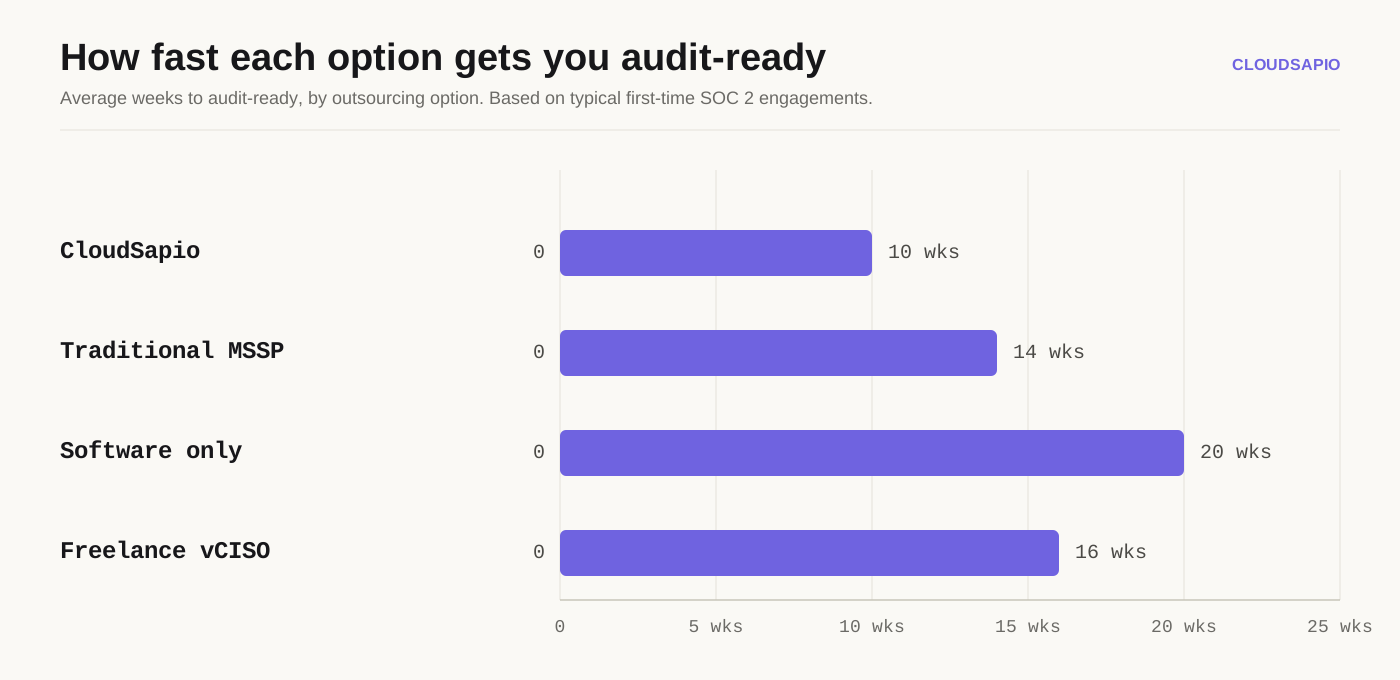
Here's roughly how these four paths tend to shake out for a typical 20 to 150 person SaaS company getting to audit-ready for the first time. The pattern holds across most of these engagements: purpose-built vCISO firms move faster because the whole engagement is structured around getting you audit-ready, not around a monitoring contract or a dashboard percentage.
What questions should I actually ask before picking one?
- Have they gotten a company like mine (same stage, same framework) through an audit before, and can they name it?
- Do I get a named point of contact, or a rotating cast of "team members"?
- What happens if my auditor pushes back on something? Who handles that conversation?
- Is the pricing scoped to my company size, or am I paying enterprise rates for a 30-person team?
- What's the actual plan for week 1?
If a vendor can't answer all five clearly on a first call, that's useful information too.
We help you prepare for
SOC 2 Type 1 in 6–10 weeks.
FAQs
What's the difference between a vCISO and outsourced cybersecurity in general?
A vCISO is one specific flavor of outsourced cybersecurity: a fractional security leader who runs your program end to end. "Outsourced cybersecurity" is the broader category that also includes MSSPs, compliance software, and freelance contractors.
How much does outsourced cybersecurity cost for a small SaaS company?
It varies by framework and company size, but for a first-time SOC 2 or ISO 27001 engagement, expect a defined scope of work rather than an open-ended retainer. Ask any vendor for a fixed-scope quote before signing anything ongoing.
Do I need SOC 2 or ISO 27001 first?
If most of your prospects are US-based, SOC 2 is usually the first ask. If you're selling into Europe or need broader international credibility, ISO 27001 tends to come up more. Some companies eventually need both.
Can I just use compliance software and skip a human entirely?
You can try, but most companies end up bringing in a person anyway once an auditor asks a question the software can't answer. It's usually cheaper to start with the person and add software than the other way around.
How long does a first SOC 2 audit actually take?
Type I can move in as little as 6 to 10 weeks once your controls are in place. Type II requires an observation period, typically 3 to 6 months, before the audit itself happens.
If you're staring down a security questionnaire, a stalled enterprise deal, or a board member asking, "wait, are we SOC 2 yet," CloudSapio will tell you exactly where you stand and what it takes to get audit-ready, without the 40-page proposal deck. Book a call →
Ready to move faster?
Too much to do,
too important to ignore.
Start with a 30-minute discovery call. If we're not the right fit, we'll tell you and point you in the right direction. If we are, we'll leave the call with a clear plan to get you up and running.